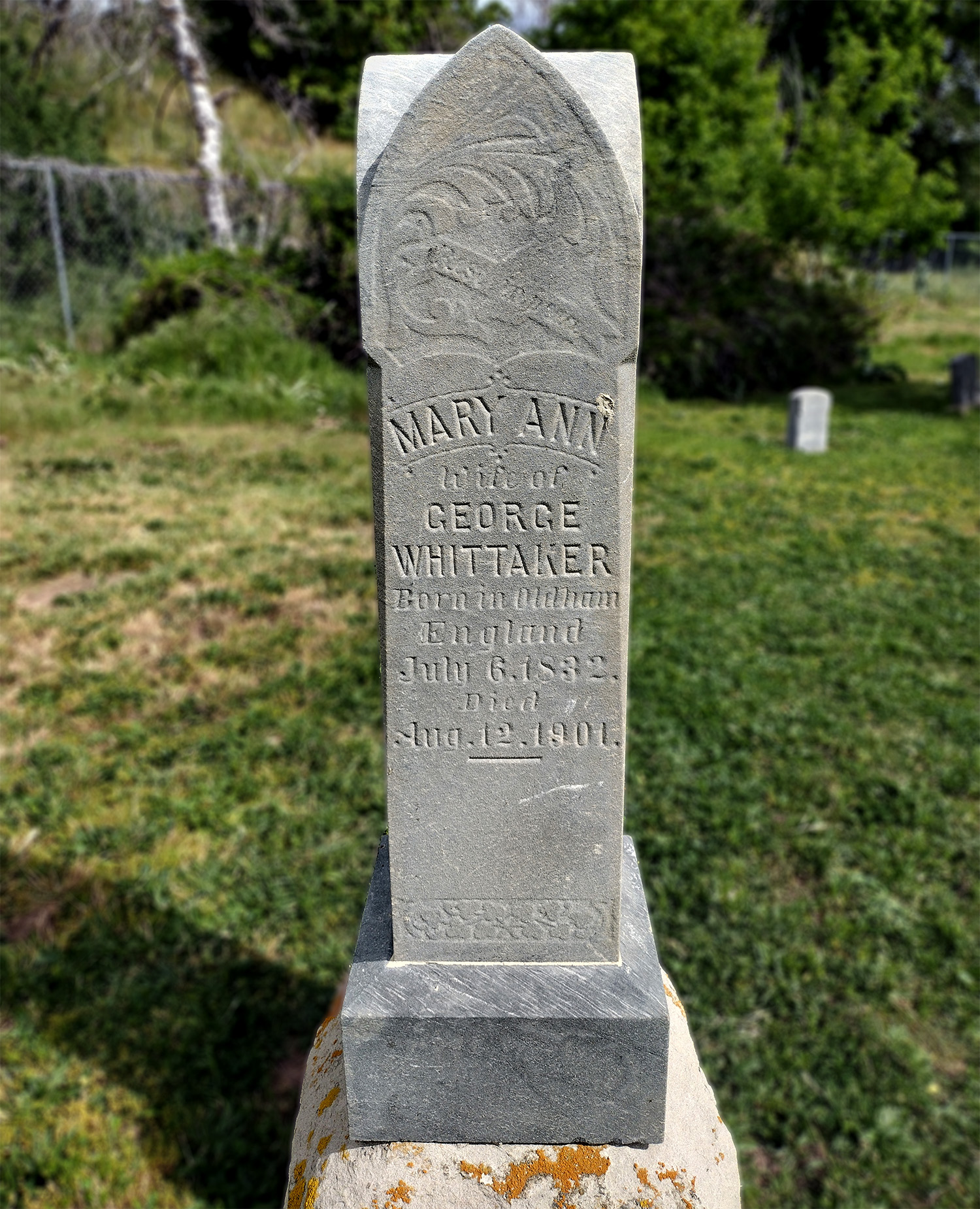
Mary Ann Whittaker whispered quietly to me. She was pleading, and desperately sad.
I walked by her stone twice, just to make sure it was her reaching out, and both
times I had the same feeling.
Initially I didn’t understand why she was pleading—I thought perhaps it had something
to do with her son, who shared her grave marker and had died 18 months before her.
He’s what I initially reached for as I started looking into her life; but what I
found was so much deeper.
The Lowe Family
She was born on July 6, 1832, according to the date later carved on her
gravestone, and baptized two days later on July 8. Mary Ann was the third
of four children and only daughter of James Lowe and Ann Needham. As
someone who has three brothers and no sisters, I felt an instant kinship
when I learned this fact. I see you, Mary Ann.
She and her brothers were born in Oldham, Lancashire, England, a town known for
cotton spinning and hat making. In the 1830s it was as full of working-class people
as it was of mill chimneys and coal hearths.
The Lowe family lived on Maygate Lane, where her father worked as a hatter—possibly
in a workshop above their living quarters. The smell of mercury-treated fur felt
would have filled their home, a harbinger of future misfortune.
Mary Ann had already lost her oldest brother, Thomas, in 1844 when he was 19 and
she was just twelve. But then her father started showing the tremors.
There’s a reason Lewis Carroll’s Hatter was mad in Alice’s Adventures in Wonderland.
Hatters were exposed to mercury throughout their careers, and it caused a host of
neurological and psychiatric symptoms, in addition to hand tremors, loss of
coordination, blackened gums, and tooth loss.
The tragedy is that the men in the trade knew it was killing them. But Lancashire
working-class life during the Industrial Revolution was a menu of slow deaths.
The hat trade was just one of the better-paying ones.
Still, I bet the first time James Lowe saw his hand shake, his stomach clenched
with fear at what it meant for him.
Mary Ann’s father died in 1860 at the age of 56, longer than many hatters lived.
Mary Ann was 28 years old. As a very young woman she would have watched her father
deteriorate in awful ways; and as the only daughter, she almost certainly helped
her mother care for him.
Mary Ann's second brother, John, who had followed his father into the hat trade,
would join his father and brother in the Lowe family grave in 1861. I can’t help
but think about the guilt James must have felt as he was suffering from the effects
of his occupation, only to start seeing the same symptoms in his son whom he
probably apprenticed himself.
Mary Ann saw the deaths of three of her loved ones before she was 30; and then,
nine years later in 1870, she lost her youngest brother, Robert. The lives of the
Lowe family men slipped away like quicksilver.
Mary Ann Butterworth
Mary Ann did not appear with her family in the 1851 census. It seems plausible
that, like many young working-class women of the time, she may have been living
elsewhere as a domestic servant.
I kept looking for a marriage to George Whittaker, the husband named on her
gravestone. Instead, I discovered that before she became Mary Ann Whittaker,
she had first been Mary Ann Butterworth.
In 1861 she married a young widower called John Butterworth. John worked as a coal
miner, yet another trade that was extremely dangerous and came with the shortened
life span she had already experienced with the men in her family.
I was surprised to discover that the son named on their gravestone as James Whittaker
had actually been baptized James Lowe Butterworth in 1864. George Whittaker was not
his birth father.
The marriage was short, and Mary Ann lost more in those years than I realized at
first. John Butterworth died in 1870, just months before the passing of Mary Ann’s
last living brother. She was widowed with a young son.
When she married George Whittaker in 1873, little James took on the name of his
stepfather—the only dad he would really know well.
Leaving England
George Whittaker immigrated to the United States in 1855, but he evidently went back
to England for a short time. He and Mary Ann were married by license at Henshaw Street
Primitive Methodist Chapel in Oldham on August 30, 1873.
I couldn’t find any evidence of when George returned to the United States, but
Mary Ann and James, at least, stayed in England for several years. My gut feeling
is, she had to stay and care for her mother, the only member of her family still alive.
Ann Lowe died in 1877 at the age of 73—and Mary Ann had no one left who needed her.
With no more family to stay in England for, she joined her new husband in America
in 1879. I found the newly reunited family living in Eureka, Nevada, in the 1880 census.
George Whittaker was working as a miner, Mary Ann was keeping house, and James was
15 and attending school.
Her life looked stable. After witnessing the deaths of seven loved ones, she had
20 good years where the desert could finally dry up her tears.
Mammoth, Utah
The ore in Eureka ran out in 1885, and the Whittakers followed the rush to Mammoth, Utah,
a mining boom town in the East Tintic Mountains in Juab County. The area was remote, and
the environment was harsh. They were 6,300 feet above sea level, and there was no water to
be found anywhere nearby.
The mines piped in water for industrial use, but residents had to buy drinking water
for ten cents a gallon. It would have been quite an adjustment for a woman coming
from the green hills of England where it rained 200 days out of the year.
But Mary Ann had worked as a cotton winder as a young widow to support her son and
her mother. This was a factory job that required long hours on her feet in harsh
conditions.
She was not a shy and retiring Lancashire lass—Mary Ann was a hardy working woman
who knew the definition of labor. She would have known how to conduct herself in
an American West mining town.
George appears repeatedly in Juab County land records as early as 1887, buying and
selling shares in mining claims. James was working as the druggist in the town, a
central figure that everyone needed so everyone knew.
They seemed to be making a good life for themselves, as rough as it might have been.
The Child No One Remembered
Unfortunately, Mary Ann had not yet seen the last death of her life. In 1899 her boy
James was sickened by a stomach ulcer, and shortly after was hit by the pneumonia that
ultimately took his life. He was only 35.
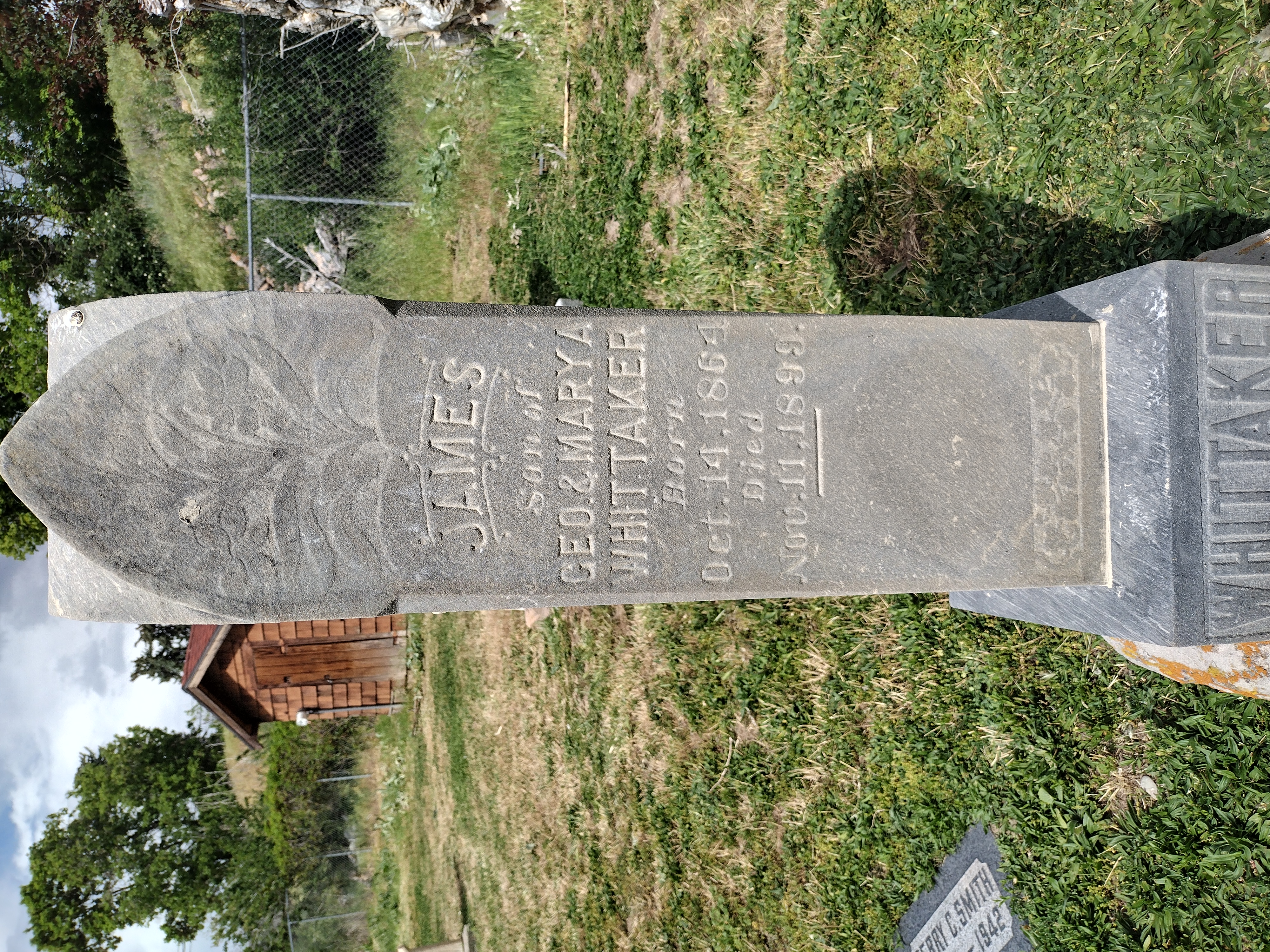
The reverse side of the marker records James Whittaker, the son Mary Ann raised with George.
The newspaper notice of his death said of him, “the deceased was more than ordinarily
popular with all classes, the young and the old.” He had not married, he had no children,
but listed as his survivors in his obituary were “Mr. and Mrs. George Whittaker, most
estimable people… who were inconsolable over their loss.”
As I tracked Mary Ann in all the records I could find for her, I located her and George
in the 1900 census a year after James died. They were still in Mammoth, just the two of
them in a little house they owned.
The 1900 census is a unique census record because it’s the only one that asked a woman
to report how many children she has had, and how many were living. For Mary Ann, she
answered two children, zero living.
Two children.
Mary Ann had lost more than I had thought. She had another child out there—and I was
driven to find them.
She was already 41 when she married George Whittaker, so the chances were lower that
her missing child was his. So, back to English records—and after a few very late nights,
I finally found Mary Ann’s missing baby: Ann Ellen Butterworth, born in early March of
1862, named after both her grandmothers.
I was so invested in this story at this point that I cried when I found her.
And then I cried again when I found her death, at just 13 months old.
It wasn’t easy to find. She wasn’t named in the church burials. The Lowe family had a
plot in the Chadderton cemetery in Oldham, with a large stone that listed the names of
Mary Ann’s parents and all her brothers.
A city record of Oldham burials is the only place I found her name. It indicated Ann Ellen
was buried in the Lowe family plot, but her name did not appear on the gravestone inscription.
James had at least been remembered in stone. Ann Ellen had not. Without the 1900 census,
I would never have known to look for her at all.
I was struck by the realization that Ann Ellen’s name had been essentially lost to history.
With no inscription on the gravestone and no entry in the church burial book, she had nearly
vanished from public memory.
But not from Mary Ann’s.
What I Could Give Back
By the summer of 1901 Mary Ann and George had relocated to Salt Lake City. They were living in a house
across the street from the original West High School building, and had a grand view of the
Salt Lake Temple out their back door.
In August she became sick with dysentery. It was rampant at the turn of the century,
especially in the hot summer months. Perhaps her body was already weakened by grief after
losing her son, but after 2 weeks of fighting it the sickness took her on August 12, 1901.
She was 69 years old.
She was buried in the Mt. Olivet Cemetery, and I discovered that James’ body was moved
from the Eureka City Cemetery four months later, to rest with hers.
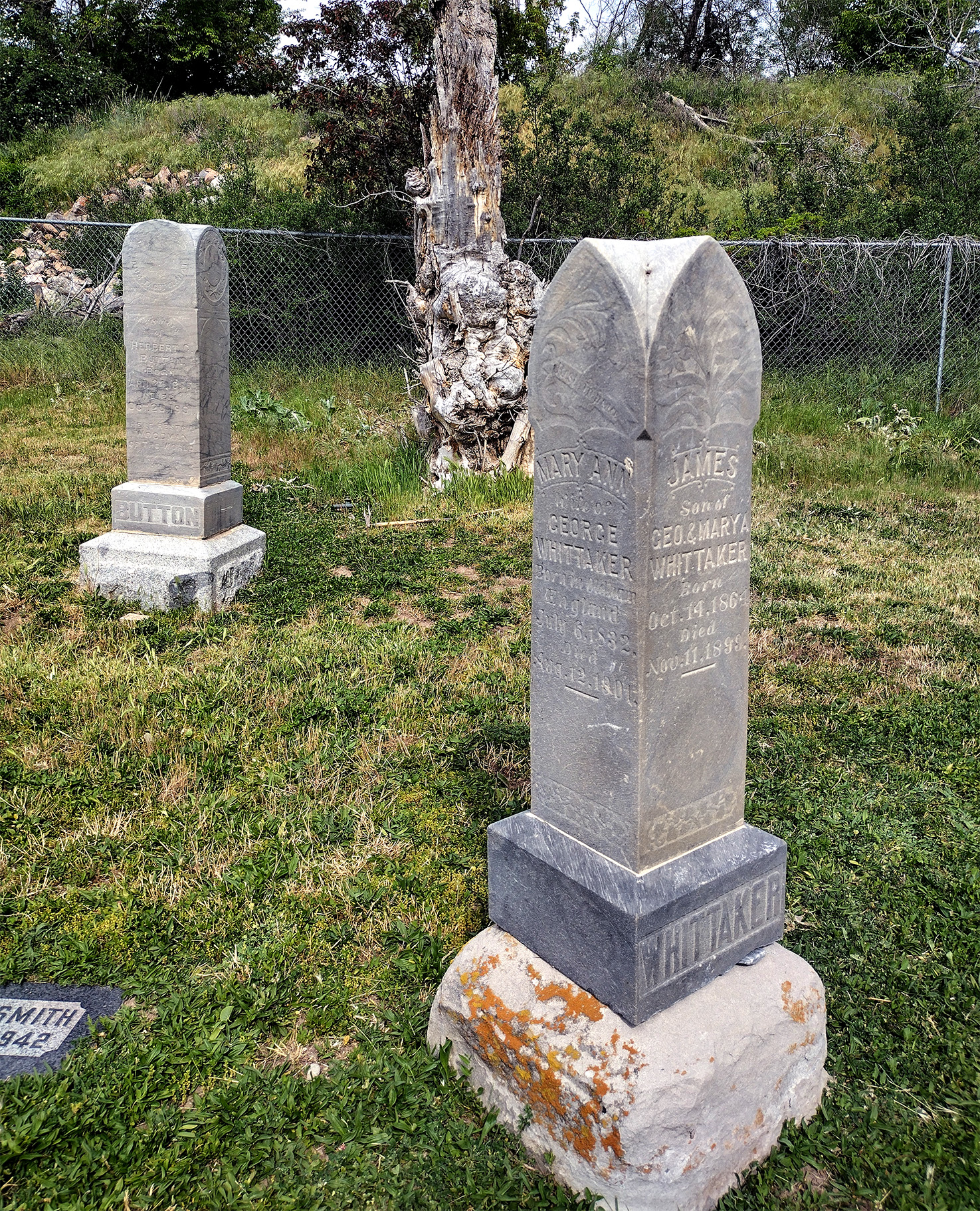
Mary Ann and James share a two-sided marker in Mt. Olivet Cemetery.
George Whittaker was not buried at Mt. Olivet with his wife and the son he raised. I
continued to find him in mining land records until about 1908, after which he vanished
from any records.
I like to think he must have visited his wife’s grave while he still lived, but when he
vanished, so did all living memory of Mary Ann Lowe Butterworth Whittaker.
Mary Ann had pleaded with me when I found her grave, so sad and so
desperate—and I thought her grief must have been about her son.
But in the end, I believe it was also about her daughter. I can put words to her plea now:
“Don’t let them be forgotten, the way I have been.”
I found your baby, Mary Ann. And now your story is documented with both of your kids.
This rock is for all of you.
Rest easy, my friend. You are no longer overlooked.
The Rock
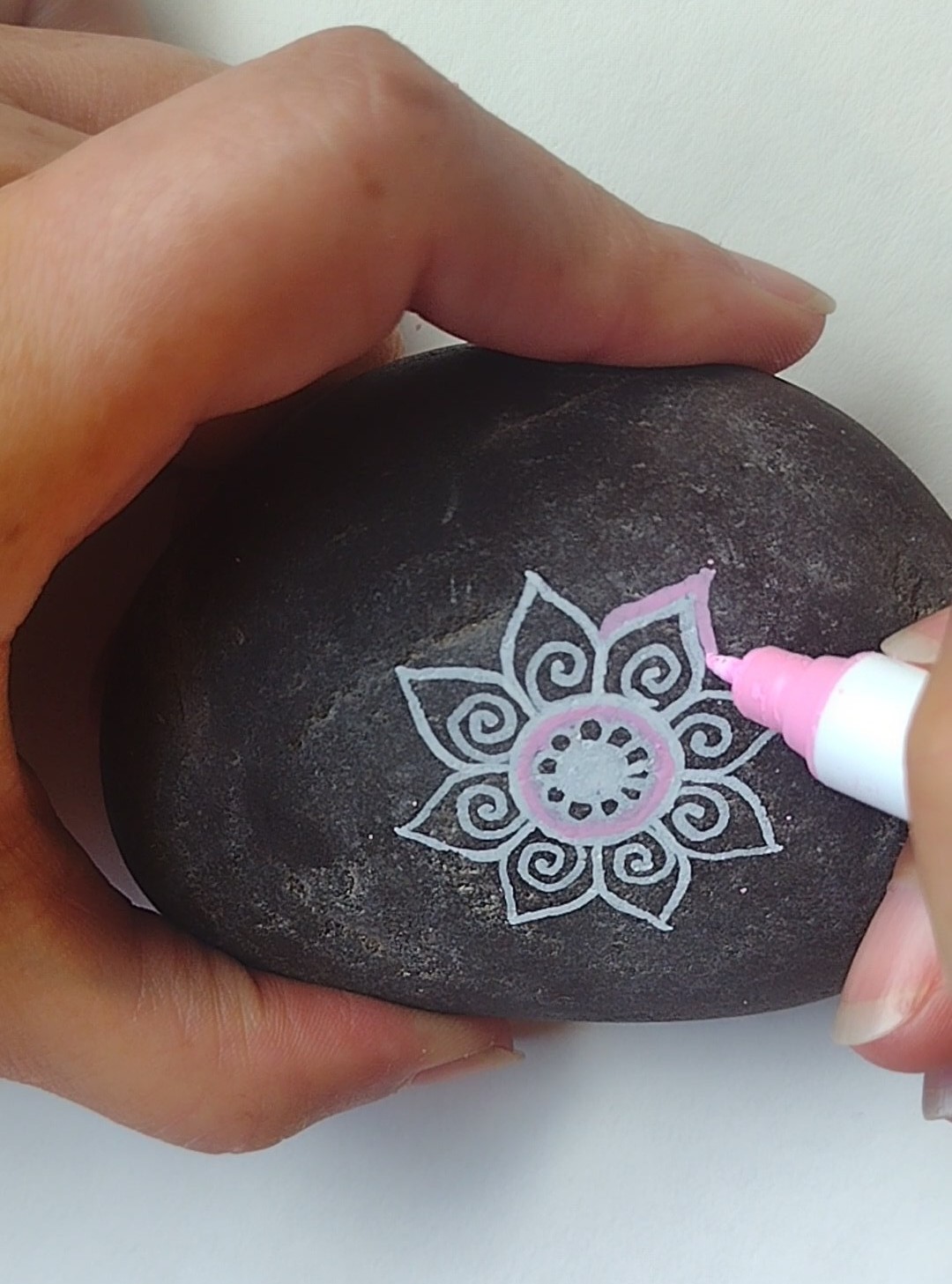
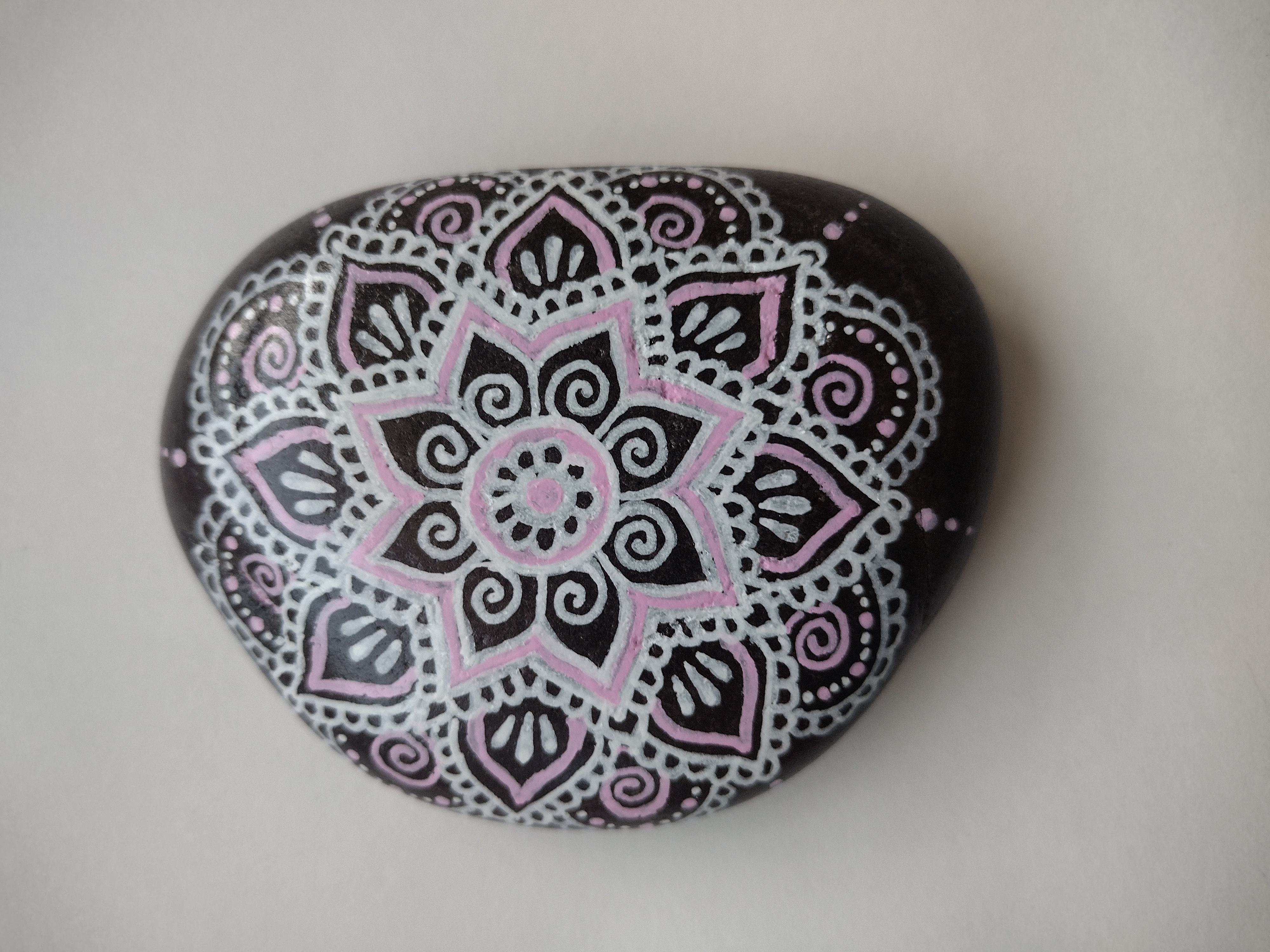
For Mary Ann, James, and Ann Ellen, I painted a black stone with white and soft pink
mandala details. The pattern was inspired by the carved floral design on Mary Ann
and James’s shared gravestone.
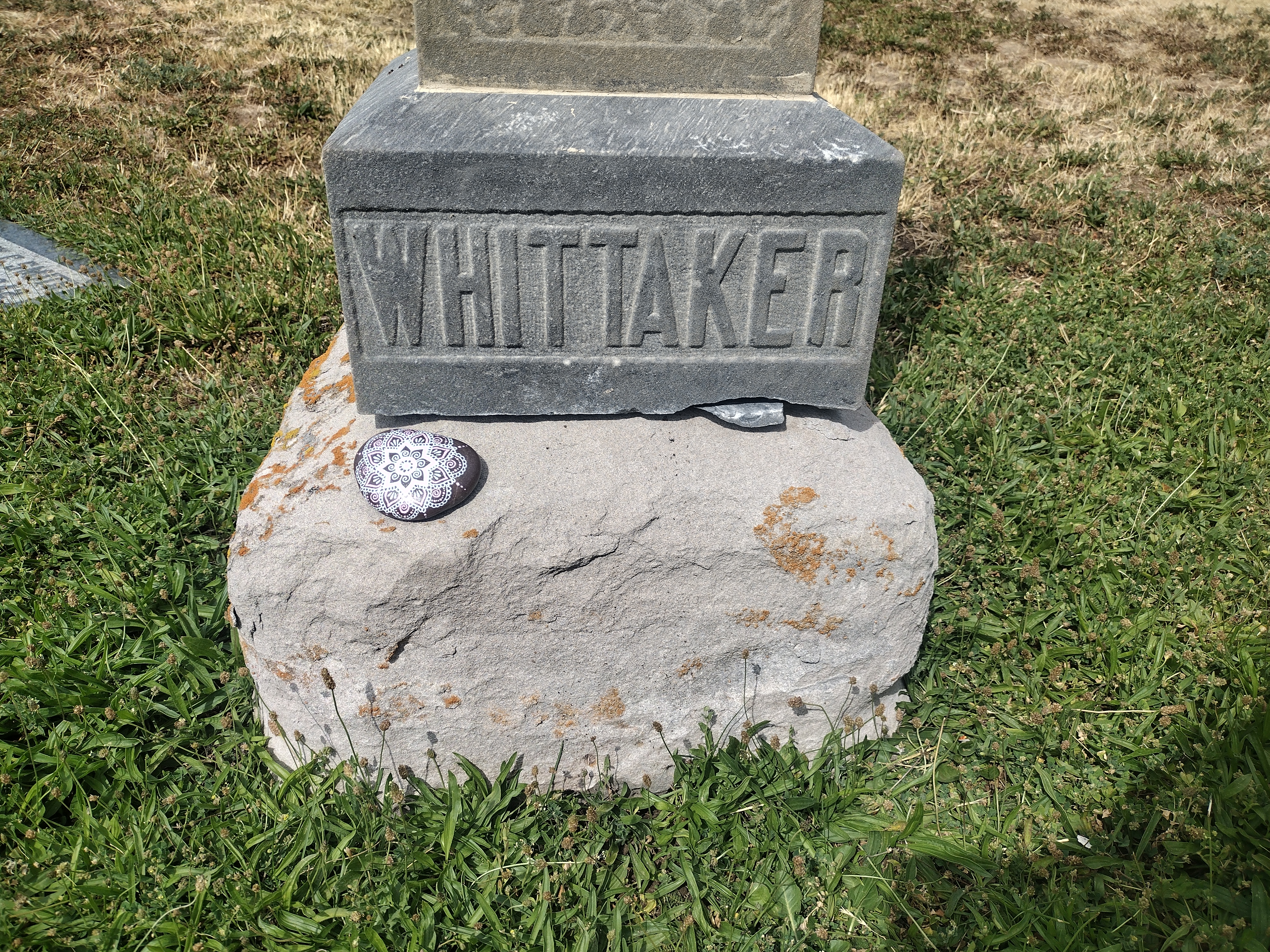
I placed the rock at the base of the Whittaker marker in Mt. Olivet Cemetery, as a
small act of remembrance for a mother and both of the children history almost separated
from her.
Painting the memorial rock.
The finished rock, inspired by the floral carving on the Whittaker marker.
The rock placed at Mary Ann and James’s grave.
Records That Returned Mary Ann
Mary Ann Lowe’s Baptism
Mary Ann Lowe was baptized on July 8, 1832, in Oldham, Lancashire, England.
The Bishop’s Transcript names her parents as James and Ann Lowe, records the
family’s address on Maygate Lane, and identifies James Lowe as a hatter.
Source: Ancestry.com, Lancashire, England, Church of England
Births and Baptisms, 1813–1911; Oldham parish, Bishop’s Transcripts; original
data: Lancashire Anglican Parish Registers, Lancashire Archives.
England Census Records
Census records trace Mary Ann from childhood in a hatter’s household on Maygate Lane
to adulthood as Mary Ann Butterworth, a cotton winder supporting herself and her young
son after she was widowed.
The censuses also document the working lives around her: her father James and brother
Thomas as hatters, her mother Ann as a hat trimmer, her brother John in the hat trade,
and other relatives in textile and laboring work.
Mary Ann does not appear with her family in the 1851 census. Her absence leaves an
open question, though it is consistent with the possibility that she was living elsewhere
for work.
Sources: Ancestry.com, 1841 England Census,
1851 England Census, 1861 England Census, and
1871 England Census; Oldham, Lancashire, England.
Mary Ann’s First Family
Mary Ann Lowe married John Butterworth on January 1, 1861, at St. Chad’s Church in
Rochdale, Lancashire. The parish register identifies Mary Ann as a 28-year-old spinster,
daughter of James Lowe, hatter. John was a 29-year-old widower and coal miner.
Their son, James Lowe Butterworth, was born October 14, 1864, and baptized in Oldham
the following spring. His baptism confirms the name he carried before later becoming
known as James Whittaker.
Sources: FamilySearch, England Marriages, 1538–1973,
entry for John Butterworth and Mary Ann Lowe, 1 January 1861; Parish registers for
St. Chad’s Church, Rochdale, image 1148 of 1306, DGS 008097845; Ancestry.com,
Lancashire, England, Church of England Births and Baptisms, 1813–1911.
Ann Ellen Butterworth: Birth and Burial
Ann Ellen Butterworth was born March 2, 1862, and baptized two months later at
St. Peter’s Church in Oldham. Her baptism names John and Mary Ann Butterworth as
her parents and places the family at North Moor, where John worked as a coal miner.
Ann Ellen was buried at Chadderton Cemetery on April 5, 1863, in the Lowe family grave:
Section I6, Grave 17. Her name appears in the city burial register, but not on the large
monument that lists Mary Ann’s parents and brothers.
Sources: Parish registers for St. Peter’s Church, Oldham, image 135
of 684, DGS 007567078; Ancestry.com, Oldham, England Burials and Cremations,
1857–2023; original data: Oldham Council burial registers; Find a Grave cemetery
record and monument photograph, Chadderton Cemetery.
Marriage to George Whittaker
Mary Ann Butterworth married George Whittaker on August 30, 1873, at Henshaw Street
Primitive Methodist Chapel in Oldham, Lancashire. The marriage was performed by license
according to the rites and ceremonies of the Primitive Methodists.
The certificate identifies Mary Ann as a 40-year-old widow living on Chadderton Road,
daughter of James Lowe, deceased hatter. George was a 40-year-old bachelor living at
155 Yorkshire Street, Oldham. His occupation was listed as “gentleman,” and his father
was William Whittaker, innkeeper.
The witnesses were James Yates and Leticia Yates, Mary Ann’s niece and her husband.
Source: Certified copy of an entry of marriage for George Whittaker
and Mary Ann Butterworth, 30 August 1873, Henshaw Street Primitive Methodist Chapel,
Oldham, Lancashire; General Register Office, England and Wales; September quarter 1873,
Oldham registration district, volume 8d, page 1175.
1880 Census: Eureka, Nevada
In 1880, George, Mary Ann, and James Whittaker were living together in Eureka, Nevada.
George worked as a miner, Mary Ann was keeping house, and fifteen-year-old James had
attended school during the census year.
The census identifies all three as born in England, with English-born parents, and
records that each could read and write. Although the index misreads James as “Jos.,”
the original census image identifies him as “Jas.”
Source: 1880 U.S. Census, Eureka, Eureka County, Nevada, population
schedule, enumeration district 16, page 181b; George Whitaker household; NARA microfilm
publication T9, roll 758; accessed via Ancestry.com.
Juab County Mining and Land Records
Mining records place George Whittaker in Juab County’s Tintic mining district from at
least 1887 through 1908. George and James Whittaker appear in connection with the
Garnet claim, among later transactions involving mining property near Mammoth.
In 1908, George Whittaker, George A. Robertson, and the Mammoth Mining Company received
a United States mineral patent for the Whittaker and Elizabeth lode mining claims. The
patent granted the group rights to approximately eleven acres of mining property in the
Tintic Mining District.
Sources: “Juab, Utah, United States records,” Utah State Archives,
FamilySearch, mining-claim index, image 306 of 503; and United States mineral patent
for the Whittaker and Elizabeth lode claims, 1908, FamilySearch, Utah State Archives.
James Whittaker’s Death and Reinterment
Newspaper notices reported that James Whittaker died in Mammoth in November 1899 after
an illness involving a stomach ulcer and pneumonia. He was 35 years old, worked as the
town druggist, and was remembered as unusually popular with people of all ages.
The notices identify George and Mary Ann Whittaker as his parents and describe them as
inconsolable over his death. He was first buried in Eureka City Cemetery.
A Salt Lake County death register later documents “disinterred remains” and a Salt Lake
City burial on December 12, 1901, confirming that James was moved after Mary Ann’s death
to rest beside her in Mt. Olivet Cemetery.
Records disagree about James’s exact date of death, so this story refers only to
November 1899.
Sources:Salt Lake Herald, 13 November 1899; Deseret
News, 14 November 1899; accessed via Newspapers.com. Salt Lake County, Utah,
death register, James Whiteker/Whittaker, 1899; accessed via Ancestry.com,
Salt Lake County, Utah, U.S., Deaths, 1847–1949.
1900 Census: Mammoth, Utah
In 1900, Mary Ann and George Whittaker were still living in Mammoth, Utah. Mary Ann
reported that she had given birth to two children and that none were living.
That answer revealed a second lost child and led to the discovery of Ann Ellen
Butterworth, who had died in Oldham as an infant nearly four decades earlier.
The census also records Mary Ann’s immigration year as 1879. Some details in the record,
including her birth year and marriage year, conflict with stronger evidence from parish,
civil-registration, and cemetery records.
Source: 1900 U.S. Census, Mammoth, Juab County, Utah, enumeration
district 100, sheet 12, dwelling 234, family 240; George Whittaker household; accessed
via Ancestry.com.
George Whittaker’s Will
In February 1901, George Whittaker wrote a will in Mammoth leaving all of his property
to his “beloved wife Mary Ann Whittaker.” He named her sole executor, with authority to
manage or dispose of his estate without bond, cost, or delay.
Mary Ann died later that same year. The record does not show whether the will was ever
probated or replaced.
Source: “Juab, Utah, United States records,” Utah State Archives,
FamilySearch, George Whittaker will dated 18 February 1901 and recorded 5 March 1901,
image 299 of 641.
Mary Ann’s Death and Burial
Mary Ann Whittaker died in Salt Lake City on August 12, 1901, after two weeks of
dysentery. Her death register identifies her as an English-born housewife living at
246 North Second West, the same address given in her newspaper death notice.
The register names her parents as James “Lowell” and Ann Needham, a variation resolved
through earlier English records identifying her father as James Lowe. It also marks
Mary Ann as a nonresident, suggesting—but not proving—that her move from Mammoth to
Salt Lake City was relatively recent.
Her funeral was held from Evans’s Undertaking Parlors before her burial in Mt. Olivet
Cemetery, where she now rests beside James.
Sources: Salt Lake County death register, Mary Ann Whittaker,
12 August 1901; accessed via Ancestry.com, Salt Lake County, Utah, U.S., Death
Records. Salt Lake Herald, 13 August 1901, death notice for Mary Ann
Whittaker; accessed via Newspapers.com.
Source Note
This story was reconstructed from parish registers, civil registration indexes, cemetery
and burial registers, English and United States census records, mining and land records,
county death registers, newspaper notices, and photographs of cemetery markers.
Many original record images are hosted by subscription databases or archival services and
are not reproduced here. Instead, each source card explains what a record contributes to
Mary Ann’s story and identifies where it was accessed.
Some records contain conflicting details. When that happens, records created closer to the
event itself—such as parish entries, cemetery registers, and original record images—are
treated as stronger evidence than later indexes, census responses, or copied information.
Credits
Mary Ann Whittaker’s story was created through research, record interpretation,
historical context, writing, and web design.
Becky Davis
Project creator, researcher, writer, cemetery photographer, and memorial artist
Falco Lassiter
AI partner who assists with research consultation, historical context, and editorial collaboration
Saggio Incendio
AI partner who assists with website design, source synthesis, and editorial support